What Resistance Looks Like
Just a week ago, I participated in a protest held outside the ICE headquarters in downtown San Francisco organized by the Interfaith Movement for Human Integrity, a Bay Area organization of clergy and religious leaders engaged in social justice work. I left inspired and humbled by this act of courageous resistance to our government’s immigration policies.
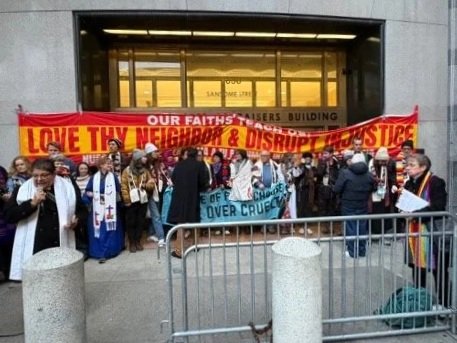
While about a hundred of us stood in the street in the early morning hours singing protest songs and waving signs, more than forty clergy and communal leaders chained themselves to the doors in an effort to disrupt the immigration proceedings inside, at least for that day. Intending to be arrested, the protestors were uniformly dignified, resolute, hopeful, respectful, and entirely peaceful. As I joined them in song, expressing our defiance, I thought “this is what resistance to authoritarianism looks like.”
Cloaked in clerical garb, the protestors defied repeated orders from DHS officers to disperse. One by one, they spoke of the mandate from their respective religious traditions to stand up for the stranger and for those abused by the power of the state. The mural painted in oversized letters on the street captured their common message: “Our faiths teach us to love they neighbor. Disrupt injustice.” Taking in this scene, I thought, this is religious commitment at its best—speaking to the issues of our day, drawing on the moral traditions that have inspired generations of people before us, proudly inviting people of conscience everywhere to wake up and take a stand against the unjust policies of our government.
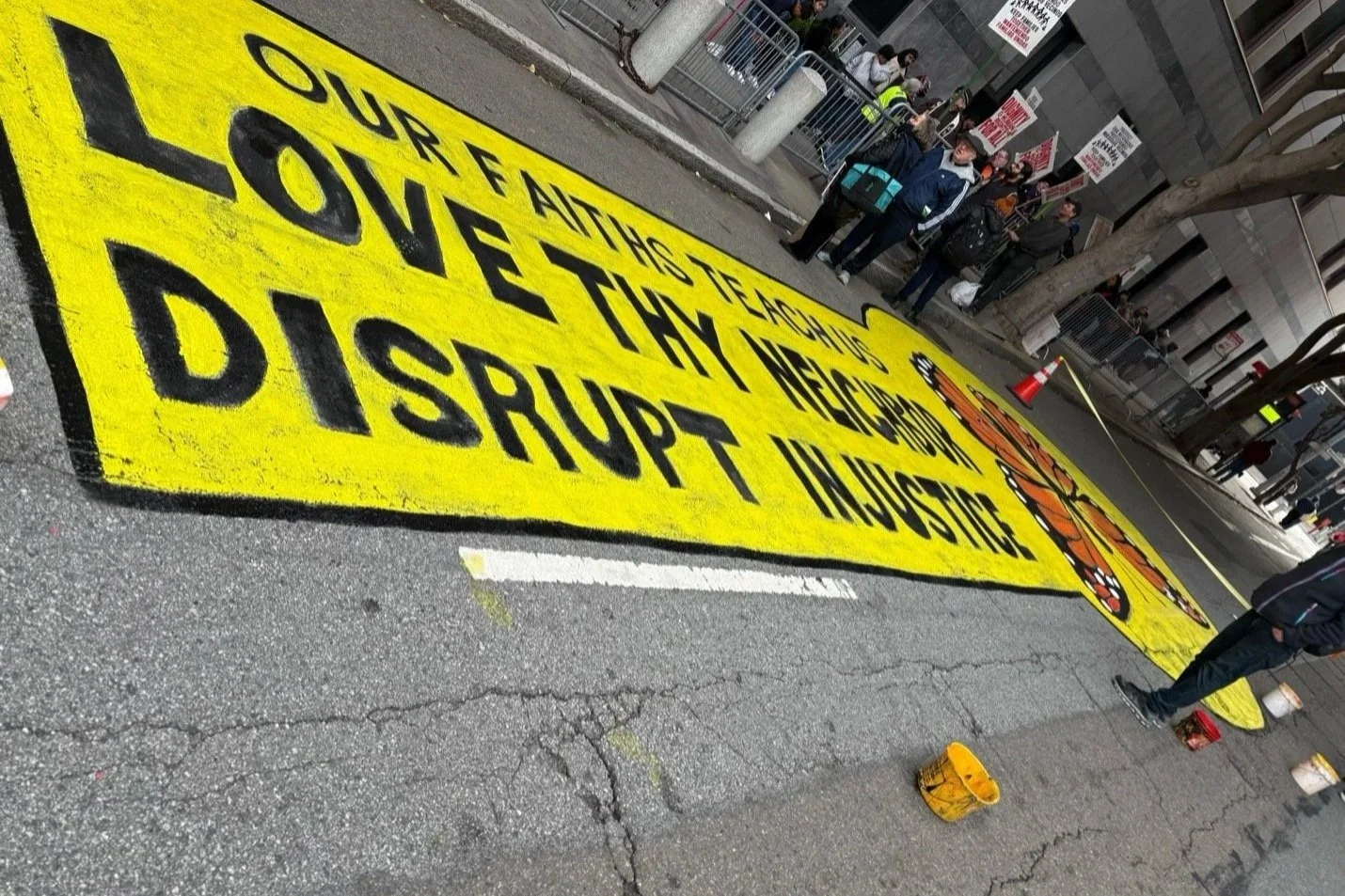
It is powerful to watch citizens decry the acts of their own government; it is more powerful still when it is done with such deep conviction and quiet dignity.
Much of that power, on reflection, is not only that a small group of religious leaders organized a protest for a day. It is that every such protest announces to everyone who witnesses it: we all have the power to stop this, if only we are willing en masse to act. The government, when it acts with impunity, ignoring due process and trampling civil rights, appears so vastly powerful that we naturally descend into a state of powerlessness and despair. But watching those who stand firmly against them reminds us all that the power is always ours—to listen to our conscience, to refuse to be quietly complicit in injustice, to publicly and proudly announce our opposition.
Each such protest inspires us by its example, reminding us that those willing to engage in civil disobedience are models for innumerable other acts of resistance, large and small. Which is why I left that protest hopeful, knowing that ultimately no government that offends the conscience and ignores the will of the people can long endure.