Saving Democracy, One Relationship at a Time
The resistance is happening all around us. Most notably, the recent No Kings rally was the largest yet with as many as 8 million people—some estimated closer to 9 million—participating. These are high profile events, designed to attract lots of media coverage. The point is to show strength in numbers, which in turn paves the way for others to show up at the next nationwide protest event. (The next major national day of protest will be May 1, when there will be a general strike—no work, no school, no shopping. Events will be held throughout the country.)
But there is a much quieter form of resistance growing, largely out of the spotlight, and that is where I think the real transformation of our country is taking place. I have had a chance to observe it up close, just over a week ago.
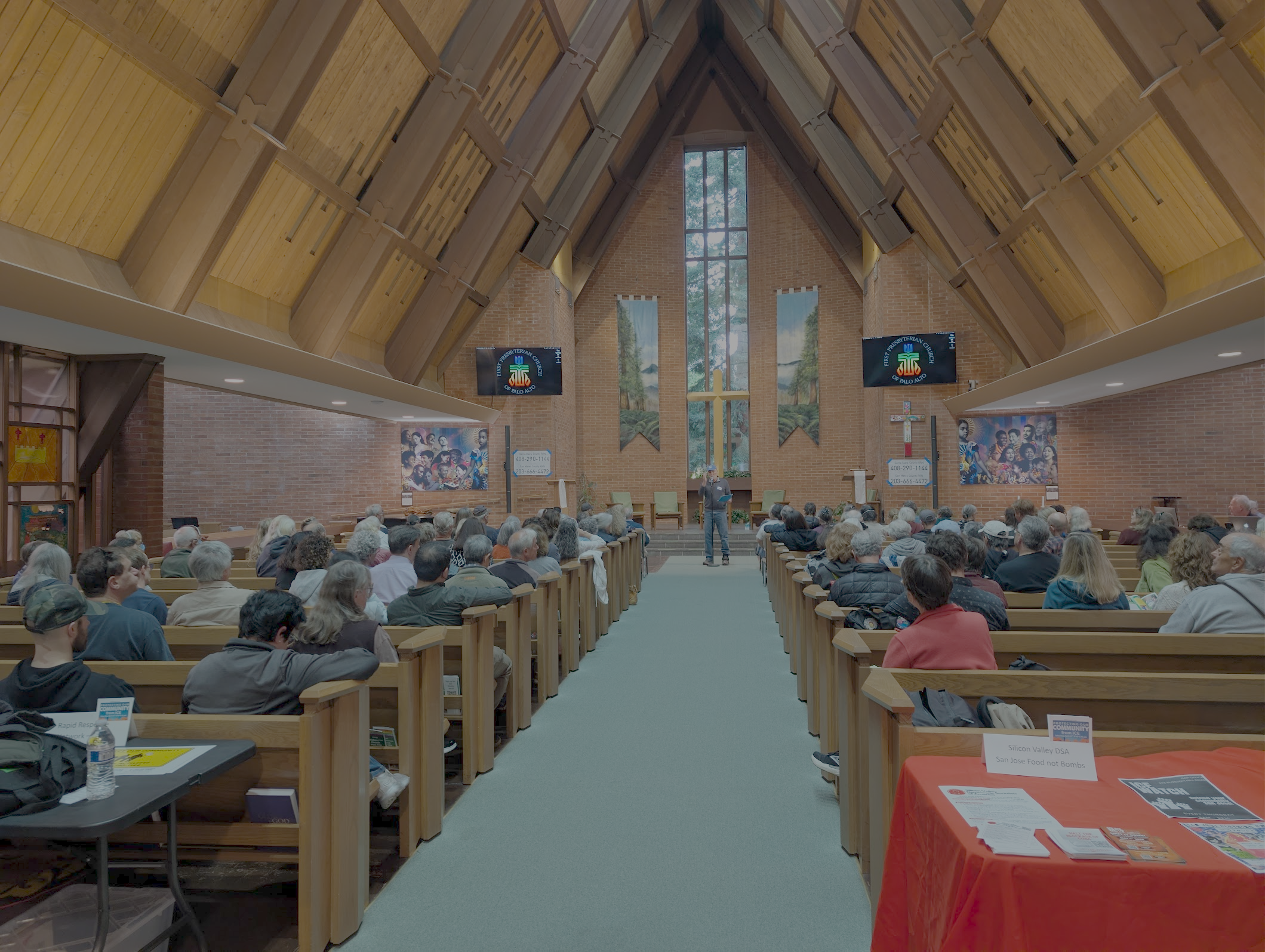
My local Indivisible chapter is now holding “Democracy Forum” events every several weeks. These are grassroots mobilizing efforts, designed to educate citizen activists to build relationships with their neighbors and galvanize their opposition to this administration. The most recent Democracy Forum I attended focused on opposing ICE activity, the acquisition of warehouses to house detainees, and surveillance cameras.
In one presentation after another, members of local grassroots organizations spoke about the work they are doing in this area. The common theme among all of them was that effective resistance requires building relationships—talking to neighbors and meeting with members of the communities most impacted by this administration’s draconian policies.
There was the video of activists in Minnesota talking about how they built powerful and effective communal networks of neighbors looking out for one another. There was the heartbreaking testimony of the mother—speaking in Spanish with simultaneous translation—about her son, taken into ICE custody a year ago, whom she has scarcely seen since, pleading with us to help protect her son. And there was the panel of activists from a few of the many local organizations working on these issues, titled “Organizing & Resistance Strategies--Building Power through Trusted Relationships.”
Building power through trusted relationships.
One after another, these activists offered a model of social change grounded in the simplest of actions--reaching out to others, talking about our concerns (and theirs), creating a sense of common purpose, and motivating others to move beyond their inertia to do something.
Initially, that could be anything—writing a member of Congress, signing up for action alerts from one of the dozens of local organizations mobilizing this resistance, signing a petition, participating in an ICE Watch, or joining an Action Pod.
The point is that each action motivates other actions, each act of resistance invites others. And effective action begins in building trusted relationships.
This is not particularly glamorous work. Certainly, it doesn’t offer us the thrill of joining masses of people taking to the streets, waving signs and shouting slogans. But it is where change really happens.
This administration has attempted to hijack our country, adopting policies that reward the super-rich and burden the most vulnerable; demonizing anyone who isn’t “really American” (meaning white, Christian, straight, and conservative); perverting our justice system to attack their enemies; and lying to us about what they’re doing, and why. We can take it back only by asserting our collective commitment to the core values of our democracy—equity, inclusivity, accountability and honesty.
But turning that commitment into effective action is essential. And that requires creating and sustaining relationships. The simple act of talking with our neighbors and friends is the prerequisite for all effective forms of resistance to authoritarianism. It is the quiet, distinctly unglamorous ground game we must pursue to counter the authoritarian juggernaut.
“We the people.” That simple phrase is the foundation of our democracy. It expresses the idea that our government must be ours. We—all of us together, locking arms and bonding together—ultimately determine how we will govern ourselves, just as 250 years ago we determined to cut our ties with imperial Britain and become a self-governing nation.
But becoming a “we” is an unending project. In every generation, we must forge and reforge the ties that bind us together and make us a political community.
We are living in a perilous time for our democracy. Whether we emerge from this period with our political culture intact will depend, in large part, on whether we have forged the relationships that alone can transform deeply-held values into a political vision and then into political change. We must reconstitute ourselves as a “we,” a political community with the power to re-make our country in accord with our basic values.
Our democracy will be saved, if at all, one relationship at a time.