History, Truth-telling, and the Future of Democracy
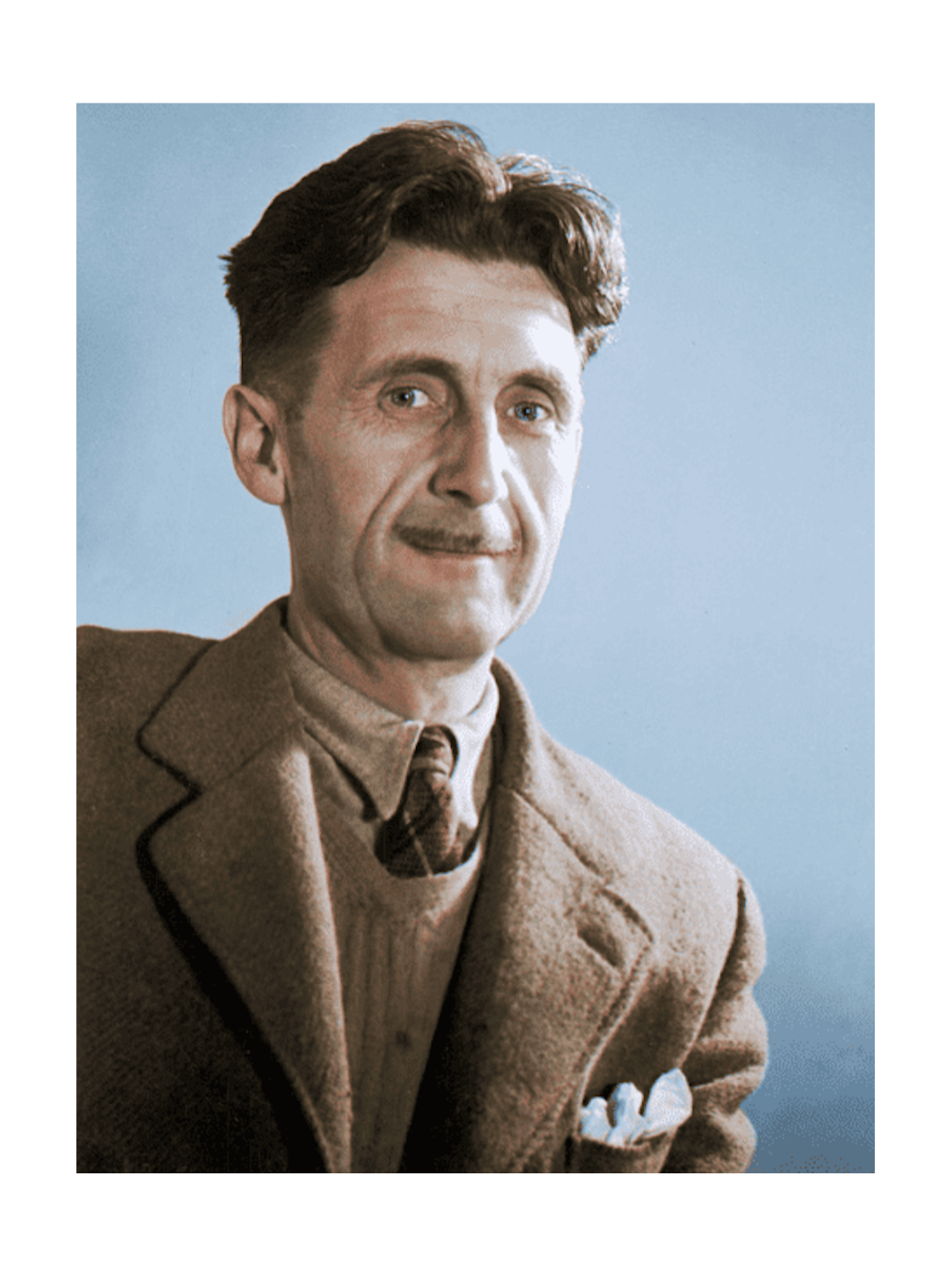
“Who controls the past controls the future. Who controls the present controls the past.”
--George Orwell
It has long been recognized that authoritarians maintain power by attempting to rewrite history and to punish those who challenge their “official view” of the past. Parade examples include Stalin airbrushing his political rivals out of official photographs, the Turks’ denial of the Armenian genocide and persecution of historians who dare to talk of it, Chinese censorship of information about the Tiananmen Square protests, and, of course, the Nazis’ invention of a mythic, superior Aryan race.
Closer to home, we can point to the rise of the “Lost Cause” mythology among former members of the Confederacy in the aftermath of the Civil War. In their telling, slavery was a benevolent, paternalistic system, the war was fought to protect states from the intrusion of the federal government, and Confederate soldiers were brave, blameless heroes defending a traditional way of life.
The way we tell our history, and especially the way that those in power enforce a particular historical narrative, has profound consequences for our self-understanding and for our collective future.
The Trump administration is now engaged in a massive campaign to manipulate our history for its own political purposes. The evidence is all around us:
· the executive order to remove hundreds of books about racism and queer experience from the US Naval Academy library,
· the removal of the pride flag from the Stonewall memorial,
· removing references to Trump’s two impeachments from a Smithsonian exhibit on presidential power,
· the executive order preventing federal agencies and contractors from conducting training that addresses "divisive concepts,"
· altering Federal websites to minimize references to slavery in descriptions of Harriet Tubman and the Underground Railroad,
· removing references to slavery from Washington’s home in Philadelphia, and
· attempting to control what universities can teach about racism, sexism, homophobia and other aspects of American history.
The fact that some of these efforts have failed or been halted (at least temporarily) by court orders is cold comfort. The administration’s efforts to rewrite our history are ongoing, aimed at erasing national sins, glorifying a white (male, Christian, heterosexual) supremacist narrative, and promoting, in the words of Trump’s 1776 Commission, “patriotic education.”
By way of contrast, consider the recent resolution introduced in the Canadian parliament calling on the government to recognize and redress its decision to intern 2,300 Jewish refugees during WWII, where they were held alongside actual Nazis who had fled to Canada. (Like many of you, I imagine, I had not previously known about this shameful chapter in Canadian history.). The motion calls on the government of Canada to create educational materials, mark the nine sites of the internment camps with information plaques, and teach future generations about this blot on Canadian history.
In our country, one of the most effective efforts to present our racist past has been spearheaded by the Equal Justice Initiative, creators of the Legacy Museum and the National Memorial for Peace and Justice (aka, “lynching memorial”) in Montgomery, Alabama. Anyone who has been there can attest to the transformative experience of confronting the history of our country’s racial violence in all its unvarnished horror.
These are the choices we face: disowning our shameful history or owning it and publicly atoning for it.
What’s at stake here is far more than correcting the historical record, important as that is in its own right. By acknowledging and publicly apologizing for past wrongs, a government reinforces a set of moral values and commitments—to treat all people with dignity, to apply the law equitably, and to prevent future abuses of government power at the expense of vulnerable minorities.
By contrast, to disown these events is to lay the groundwork for injustice, based on a whitewashed history of national pride and a mythic, pure national character. It entails erasing the experience of those who have been targeted by official policies and those who have been subjected to less formal, but no less pernicious, forms of discrimination and disenfranchisement.
The administration’s strategy here is clear to anyone willing to look past the veneer of patriotic rhetoric. If your goal is to assert white power and protect the privileged, you need to disassociate yourself from these terrible aspects of our history. First, because you can’t allow your agenda to be associated with widely discredited systems of oppression like slavery and state-sponsored racism, and second, because it gives you cover to pretend that you’re not doing what you’re actually doing.
Rewriting the role of minorities in our history—their unique contributions and especially the ways in which they have suffered—serves to make them invisible, which then facilitates the programs that discriminate against them.
As George Santayana famously wrote, “Those who cannot remember the past are condemned to repeat it.” He might well have added: those who purposely misremember the past arrogate to themselves the power to re-enact it.
The way we tell our history isn’t just an academic exercise; it’s about deciding what kind of country we aspire to be. If we fail to tell our history truthfully, we cannot build a society in which we act truthfully and transparently with one another to promote the common good.
This is why we must protest all the administration’s efforts to distort and whitewash our history. It is a form of resistance—indeed, one of the most powerful forms of resistance—to the authoritarian effort to reshape our national collective memory and undermine our democratic values.
We must repeatedly affirm the complex, messy and unflattering elements of our past, along with our past achievements, to enable everyone to address the issues we face today in a clear-eyed and constructive way. Doing so is necessary to preserving our democracy in the face of authoritarians’ efforts to distort our past for their own purposes.
Telling our history truthfully is a political act. It is an affirmation of the moral importance of creating a society on a foundation of honesty and mutual recognition. This is not only the work of professional historians. It is incumbent upon all of us.