A Particular Kind of Hope
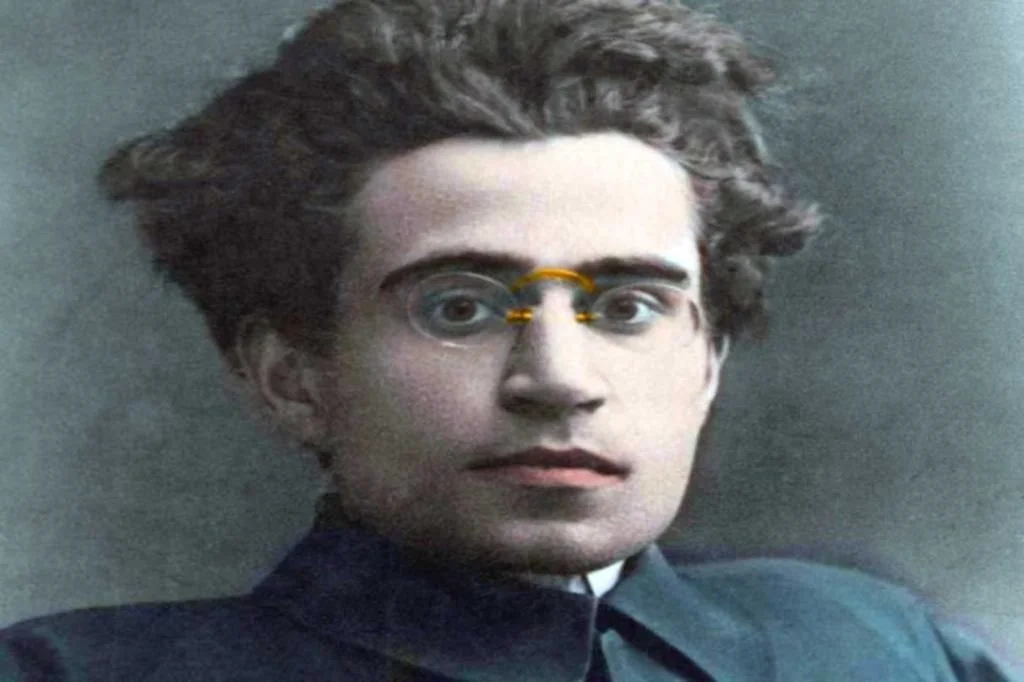
“The old world is dying, and the new world struggles to be born: now is the time of monsters.” Attributed to Antonio Gramsci, 20th c. Italian politician and political theorist
Though this may be a somewhat loose translation of the quote attributed to Gramsci, the idea seems remarkably prescient for our time.
We are watching something crumbling—the post-WWII international order, trust in institutions and especially in governments to address the needs of their citizens, the ability of opposing political factions to compromise, or even to show a modicum of respect for one another. And we are witnessing the emergence of “monsters,” people with no discernable moral compass, no principles or ideals beyond naked self-interest.
There is something terrifying about all of this, and the hope that something new and better will emerge from this chaos is hard to find and harder yet to sustain. This, at least, is how I feel each morning when I open the newspaper and attempt to wrap my head around the latest political news. It feels as though the monsters are running the show.
In this context, I want to reflect on a recent interview with Rebecca Solnit, a prominent progressive thinker and a prolific author. Among her seventeen books are A Paradise Built in Hell, Hope in the Dark, and, most recently, The Beginning Comes After the End: Notes on a World of Change. (Disclaimer: I haven’t read this latest book, but she talks about its thesis and why she thinks it’s important on the Gray Area with Sean Illing, a podcast that you can find here.)
Solnit’s main point is that progress happens gradually and incrementally, which makes it hard to recognize, especially in the midst of all the challenges we’re currently facing. And it is perhaps especially difficult to recognize for progressives, who are, by nature, idealistic and prone to bemoan any setback to human rights or attack on liberal values.
Solnit offers several kinds of evidence for her claim. First, she notes how strongly the right has fought back against liberal institutions and policies. They feel deeply threatened, and this itself is evidence of how much those institutions and policies have prevailed. Whether it’s about gay rights or DEI or environmentalism or racial equity—liberal views have become mainstream, widely held by the increasingly large percentage of Americans who hold college degrees, and who wield outsized political and economic power in this country. We notice the reactionary, far-right attempts to undo all these advances, but fail to notice just how much progress we’ve made, especially in the past fifty years or so.
She also notes that, while it is possible to take away people’s rights—the overturning of Rowe v. Wade is a parade example—it is much harder to take away people’s belief that they have those rights. Once the Supreme Court ruled that people have the right to use contraceptives (in 1965 and 1972), they might (try to) reverse themselves, but they won’t convince people that they don’t have that right.
Finally, Solnit urges us to take the long view. Progress always unfolds slowly, in fits and starts, and periods of progress alternate with a backlash by those who fear they are losing the “old world” that gave them power, prestige or privilege. Reconstruction was followed by Jim Crow and decades of horrific racial violence; feminism in the 60’s was followed by the rise of the anti-abortion movement; the election of our first Black president was followed by the rise of the “birther movement” and the election of Donald Trump. Progress is never linear. If we expect that it is, we are setting ourselves up for despair.
What to make of all this?
On the one hand, there is surely some validity to this perspective. Viewing history through a wide-angle lens, so to speak, enables us to see how many victories have been won—women can vote, African Americans are not enslaved, laws exist that prohibit child labor and that mandate accommodations for people with disabilities, and so on.
And yet, the crisis we’re living through is real and, arguably, more challenging to our democratic form of government than anything since the Civil War. The attacks on science and on the rule of law, the blatant corruption of the administration, the shredding of America’s international alliances and its abandonment of global humanitarian programs, the attempt to whitewash American history, and the rolling back of voting rights and affirmative action programs—to name just a few—amount to a massive assault on the values of equity, democracy and basic human decency. (And, to be fair, Solnit doesn’t minimize these threats, either.)
How do we hold these two realities at one and the same time? What stance should we adopt in relation to the threats we are experiencing, but also the real advances we have made?
I suggest that we need to maintain a kind of hope, but one tempered by the harsh realities of the world in which we find ourselves.
To abandon hope is to succumb to the idea that all is lost, that there is nothing we can do to make a difference. We feel impotent and demoralized, afraid to take a speak out and convinced that it won’t matter even if we do.
And, conversely, to embrace a vision that progress is slow and steady, perhaps even inevitable, is to lull ourselves into the idea that we need not act at all. For if we imagine that the forces determined to turn back the clock on human progress will always lose, we can put down the newspaper (or not pick it up at all) and just quietly go on with our lives, oblivious to the threats we face.
On one view, action is futile; on the other, it is unnecessary. Both views undermine the power we actually have—indeed, the only power we have ever had—which is the power to act now to affect the world in the future.
Nothing important or meaningful was ever achieved without great effort. Now is the time for us to make that effort, in whatever ways we can, large or small.
I’ll close with the words of Marc Elias, founder of Democracy Docket, which I quoted at several Indivisible gatherings that my wife and I hosted in our home a few months ago:
“Hope is not a naïve emotion. It is a sober responsibility. Hope is what we do when the odds are long and the options limited. It is the stubborn act of trying when despair feels easier. Rather than a passive optimism, hope is the commitment of those who believe they can make a difference, however small.
Despair is peddled by the right to convince us that resistance is futile, and it is echoed by too many on the left who would rather sit back and say all is lost. Cynicism asks nothing of us; hope demands everything. When people choose to act rather than surrender, that is what keeps democracy alive.”
Let us resolve, then, to act—clear-eyed about the forces arrayed against us, but determined to use every means at our disposal to make a difference. This is our most basic responsibility in these trying times. We dare not shirk it.